
English| EUR
Suggested for you
More currencies
Choose a language
Lake Titicaca sits at 3,812 meters above sea level, straddling the border between Peru and Bolivia. The lake spans 8,372 square kilometers and supports indigenous communities whose traditions reach back centuries. This guide answers whether visiting Lake Titicaca delivers on its reputation, what the experience involves, and how to plan around altitude, weather, and regional logistics.
Quick answer
Lake Titicaca is worth visiting for travelers who prioritize cultural immersion and high-altitude landscapes over polished infrastructure. The Uros floating islands, Taquile's textile traditions, and Amantaní homestays offer direct contact with living Andean cultures. A 30 PEN conservation fee applies at specific regional sites and trailheads. Arrive between 07:00 and 10:00 for clearer skies and calmer water before afternoon winds pick up.
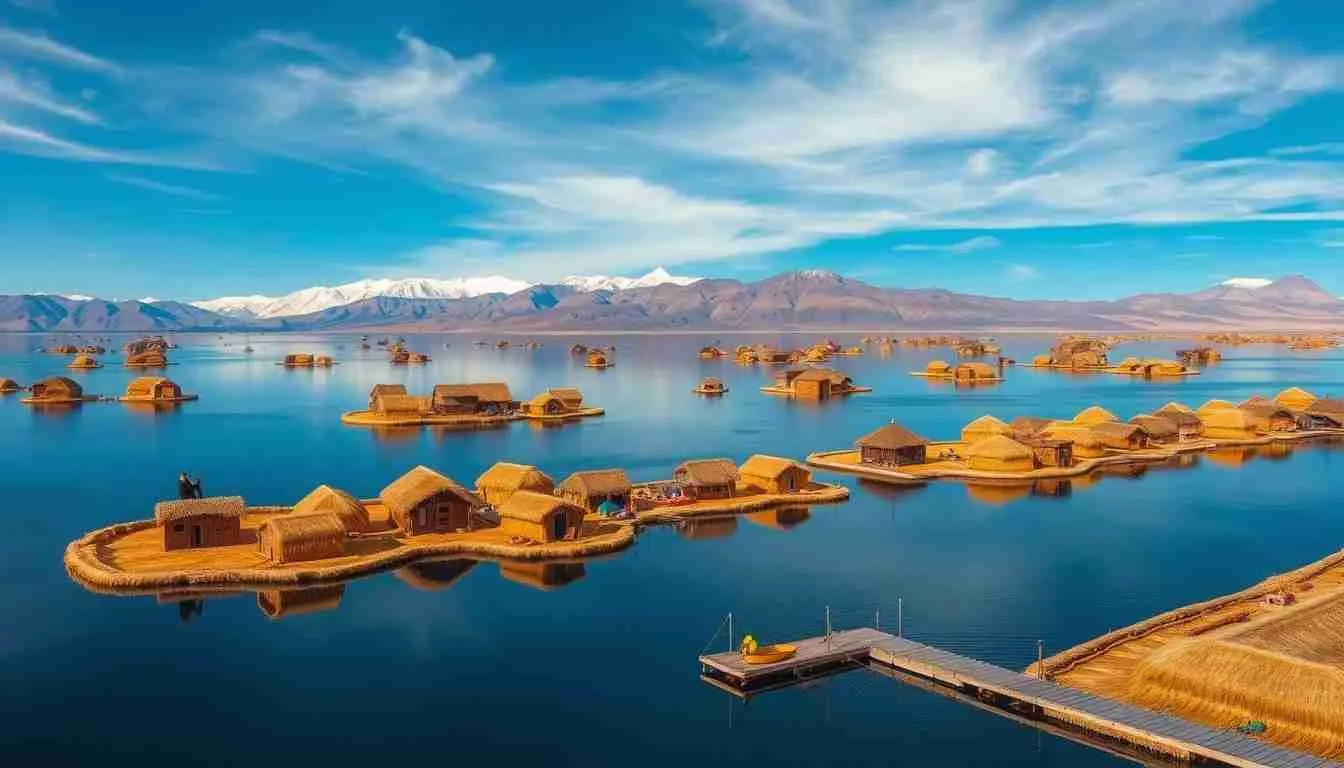
Lake Titicaca holds 41 islands, but only a handful receive regular visitors. The Uros people maintain roughly 60 floating platforms woven from totora reeds, each housing a family or small cluster of homes. The islands drift slightly with wind and current, anchored by eucalyptus stakes driven into the lakebed. Travelers board small motorboats in Puno and reach the nearest platforms within 30 minutes. The visit involves walking across spongy reed surfaces, watching demonstrations of traditional construction, and purchasing textiles directly from residents. Some find the encounter genuine; others describe it as staged. The answer depends on expectation. Taquile and Amantaní lie farther out, requiring two to three hours by boat. Taquile's men knit intricate belts and caps, a practice recognized by UNESCO. The island enforces communal land ownership and bans motorized vehicles. Amantaní offers homestays where guests sleep in family compounds and participate in evening meals. Both islands demand physical stamina—Taquile's main plaza sits 230 meters above the dock, reached by steep stone staircases. Altitude affects everyone differently, and acclimatization in Puno for at least one night is standard advice. Weather shapes the experience as much as itinerary. The lake sits in a high-altitude desert, and temperatures swing widely between sun and shade. Morning departures encounter glassy water and sharper visibility across the Cordillera Real. By midafternoon, wind churns the surface and cloud cover thickens. Rain arrives sporadically from November through March, occasionally stranding boats until conditions settle. Visiting Lake Titicaca means accepting that nature dictates the schedule. The question of whether Lake Titicaca is worth visiting pivots on what justifies the effort. The lake offers no UNESCO monuments, no dramatic wildlife migrations, no adrenaline activities. It offers altitude, isolation, and cultures that have adapted to both. Travelers who value unfiltered human geography over constructed attractions tend to leave satisfied. Those seeking comfort, speed, or spectacle often wish they had allocated their time elsewhere. The lake rewards patience, curiosity, and tolerance for cold wind at dawn.
“The lake offers no UNESCO monuments, no dramatic wildlife migrations, no adrenaline activities—it offers altitude, isolation, and cultures that have adapted to both.”
The optimal time to visit Lake Titicaca is during the dry season from May to October, specifically prioritizing a morning arrival. This window ensures the most stable weather conditions and calmest water for boat excursions across the high-altitude lake.
Dry, sunny, 15°C to 18°C
These months offer clear skies and minimal rainfall, making them ideal for outdoor exploration.
Rainy, frequent clouds, 12°C to 15°C
The wet season brings increased precipitation, though visitors often encounter fewer travelers during this period.
—
Arriving during this morning window provides clearer skies and calmer waters for boat travel before afternoon winds develop.
Verdict: The best opportunity for an optimal experience is arriving between 07:00 and 10:00 during the dry season months of May, September, or October.
A two-day visit balances boat transfers, island exploration, and overnight homestay logistics. The sequence below accommodates the 3.5-hour crossing from Puno and gives each major island adequate time.
Board a shared boat for the 3.5-hour crossing to Taquile or Amantaní; morning departures avoid afternoon wind and chop.
Most boats pause for 30–45 minutes at the reed platforms; this is a brief photo and craft-market stop, not a deep visit.
Disembark at Amantaní or Taquile, meet your homestay family, and walk uphill to the village; altitude and uneven paths slow the pace.
Climb to Pachamama or Pachatata temple sites on Amantaní (around 4,000 m); the walk takes 60–90 minutes and rewards with open-water views.
Share a meal with your host family and settle in; electricity is limited and nights are cold, so bring layers.
Explore the terraces and textile cooperatives before the return boat leaves mid-morning; departure times are fixed by the operator.
The boat retraces the route, often stopping briefly at Uros again; expect to dock in Puno by 14:00–15:00.
Lake Titicaca is accessed primarily through the port city of Puno, Peru. Travelers typically arrive in Puno via ground transportation before connecting to boat services at the main harbor for island excursions.
Interprovincial bus to Puno Terminal Terrestre
Local taxi to Puno Muelle (Main Port)
Public or private boat from Puno Muelle to Uros/Taquile
Plan your arrival to the Puno port between 07:00–10:00. This window ensures calmer waters for boat travel and provides clearer skies before the onset of afternoon winds.
Lake Titicaca is accessible daily, though boat operations and site access align most effectively with the recommended morning arrival window.
Everything you need to know about is lake titicaca worth visiting
Many travelers find that is lake titicaca worth visiting because of its unique high-altitude geography and cultural heritage. The region offers deep insights into indigenous traditions and the history of the Uros people on their floating reed islands. Experiencing the vast expanse of this massive highland basin provides a perspective distinct from coastal or jungle excursions.
Travelers often find that is lake titicaca worth visiting to explore the immense biodiversity and historic landmarks found along the shoreline. Engaging with local communities allows for a deeper appreciation of ancestral customs that remain active in this region today. Visitors consistently report that the serene environment is a highlight of their Peruvian itinerary.
Access to certain regional sites and trailheads requires a conservation fee of 30 PEN per person. This fee supports the maintenance of protected areas and local infrastructure. You should prepare this amount in local currency as you plan your logistics.
For those wondering is lake titicaca worth visiting, the best arrival window is 07:00–10:00 to ensure calm waters and clear skies. Starting your boat journey early helps you avoid the stronger winds that often pick up in the afternoon. This schedule ensures a more comfortable experience as you navigate between the islands.
Families often conclude is lake titicaca worth visiting due to the educational opportunities regarding the unique ecosystem and floating structures. Careful planning regarding altitude acclimatization is recommended for younger visitors to ensure comfort. Many guided tours accommodate family needs while exploring these historical aquatic landmarks.
The destination is open daily from 00:00 to 23:59, allowing for flexible travel scheduling throughout the year. While the region is always accessible, you should verify local transport operations if you have specific seasonal travel dates. The consistent opening hours make it a reliable stop for any South American journey.
The most common error is failing to allow enough time for altitude acclimatization before embarking on extensive boat trips. Rushing the itinerary often prevents visitors from fully appreciating the depth of the local culture and the vastness of the lake. Prioritizing a gradual pace allows for a more rewarding exploration of this high-altitude destination.